


On this page
- Two different questions that get asked as one
- What makes it a medical spa rather than a spa
- Can a physician own a medical spa?
- Can a nurse practitioner own a medical spa?
- Can a physician assistant open a med spa?
- Can an RN own a medical spa?
- Can an esthetician open a medical spa?
- Can a non-clinical owner own a medical spa?
- What an MSO can and cannot do
- What licence do you need to open a medical spa?
- The medical director is a role, not an ownership stake
- What tends to go wrong
- What it costs to get to the starting line
- What a non-clinical owner can offer today
- Where we sit
Almost anyone can own the business. Far fewer people can own the medical practice inside it. In most states a physician, and in some an NP, may own the entity that delivers the treatment, while everyone else, including RNs, estheticians and non-clinical investors, holds a management company alongside it. Which one you are asking about changes the answer completely.
Two different questions that get asked as one
“Can I own a med spa” is doing the work of two questions, and nearly all the confusion in this subject comes from collapsing them.
Who may own the business? The premises, the brand, the booking system, the staff who are not clinicians, the marketing, the equipment. In most places, anyone.
Who may own the entity that delivers the medical service? The company that employs or contracts the clinicians, holds the clinical records and takes responsibility for treatment. This is the restricted one, and the doctrine that restricts it is the corporate practice of medicine.
The American Med Spa Association describes the purpose of those prohibitions as ensuring “only licensed physicians or entities wholly owned by licensed physicians practice medicine, thus limiting the commercialization of medicine by non-physicians”. Whatever you think of the policy, that is the rule you are structuring around.
So the honest version of the answer is not a yes or a no. It is: you can almost certainly be an owner. What you probably cannot be, unless you hold the right licence in the right state, is the owner of the clinical side.
What makes it a medical spa rather than a spa
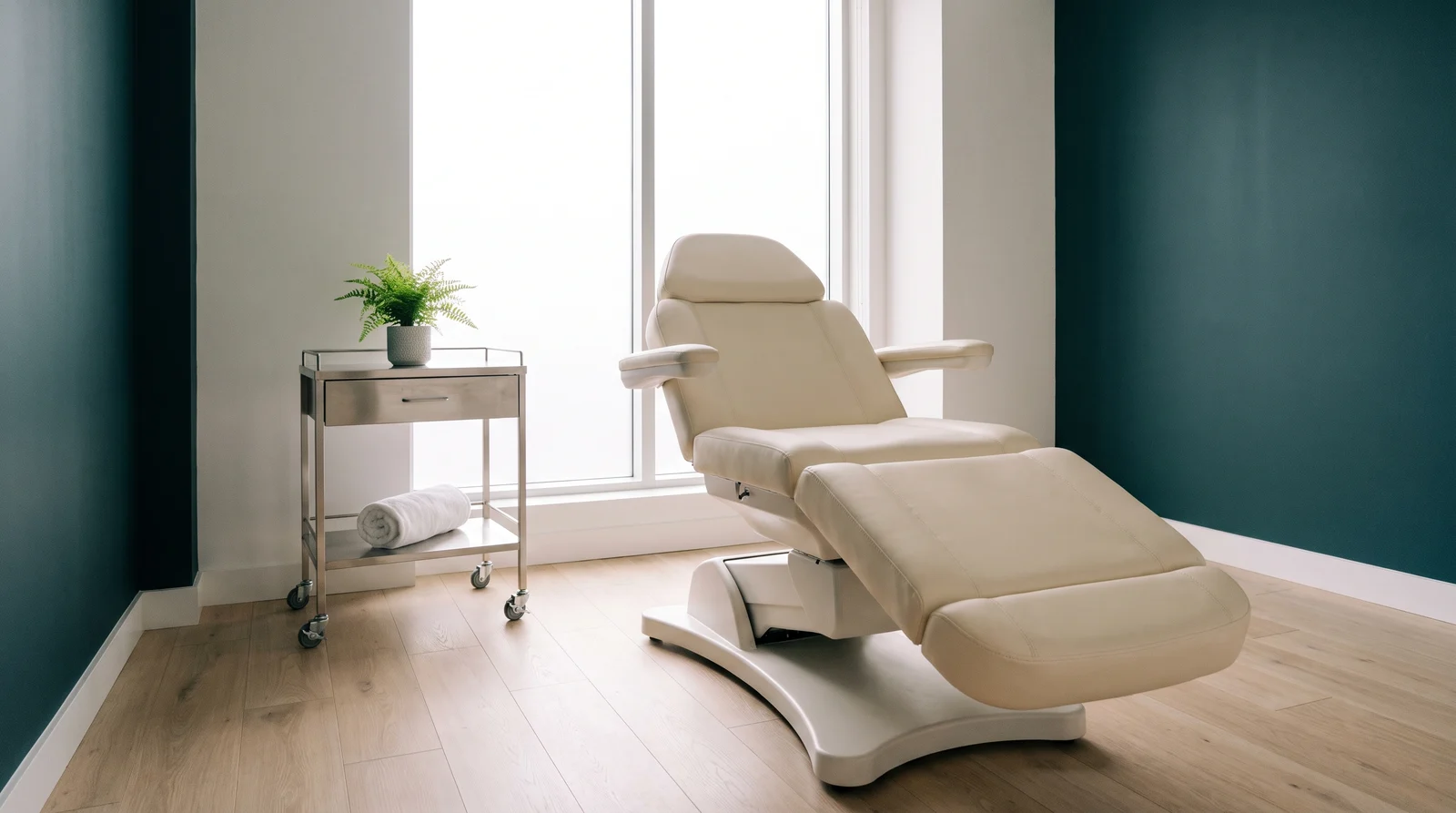
Worth settling early, because a lot of owners assume the label is theirs to choose. It is not. What decides it is the procedure.
Injectables, prescription-strength treatments, anything that penetrates the dermis, and most energy-based devices are treated as medical procedures. AmSpa notes that Texas has stated the position plainly, that performing non-surgical elective procedures is the practice of medicine. Once a business does those things, it is a medical practice with a spa aesthetic, and the ownership rules attach whether or not the signage says medical.
Which cuts both ways, and the second direction is the useful one. A business that offers facials, waxing, massage and non-medical skincare is not caught by any of this. The moment a needle or a laser appears, it is.
Can a physician own a medical spa?
Yes, in every state. This is the one uncomplicated answer in the subject, and it is why the structures below all end up with a physician somewhere in them.
A physician can own the clinical entity outright, act as the medical director, and hold whatever share of the business the parties agree. In practice a physician-owner still has to decide how much of their own time the practice needs, which is a different question and often the harder one.
Can a nurse practitioner own a medical spa?
Sometimes, and it turns on two separate tests that get merged as often as ownership and operation do.
Test one: practice authority. Roughly 22 states and the District of Columbia grant nurse practitioners full practice authority, meaning they can evaluate, diagnose, order tests, initiate treatment and prescribe without physician supervision or a collaborative agreement. Other states are described as reduced practice, requiring a collaborative agreement, or restricted, requiring supervision.
Test two: corporate practice of medicine. Separate from what an NP may clinically do, some states still require the entity delivering medical services to be physician-owned.
Both have to point the same way. Full practice authority does not by itself grant the right to own the clinical entity, and this is the specific mistake worth avoiding: California, Texas, Florida and Georgia are all described as states where an NP cannot directly own the clinical entity, so the route there is a physician-owned professional entity alongside an NP-owned management company.
Where both tests are favourable, an NP can typically form a professional entity and operate directly. Where they are not, the NP builds the economics through the management company instead. Confirm your own state with your board and your counsel, because the two tests are set by different bodies and the published summaries disagree with each other more than you would like.
Can a physician assistant open a med spa?
Generally not as sole owner of the clinical entity. PAs practise under a supervising or collaborating physician in most states, and that relationship tends to carry through into what the ownership rules permit. Some states allow a PA to hold a minority interest in a professional entity alongside physician owners.
The practical route for a PA is the same one as for most other licences: participate in the professional entity to the extent the state allows, and own the management company outright.
Can an RN own a medical spa?
An RN can own the business. An RN cannot order the treatment, and in most states cannot own the entity that delivers it.
This is the largest group asking the question and the one where the answer gets softened most often, so it is worth being exact. A registered nurse administers treatment under an order written by a physician, NP or PA. That is the same division that governs IV therapy and every other prescription service: the nurse’s licence covers administration, not the decision to treat.
On ownership, California is the clearest published example: the medical corporation must have physicians holding at least 51%, and an RN may hold a minority interest, up to 49%, but cannot be the sole shareholder or the majority owner. AmSpa describes that same 51% requirement and notes that some states permit NPs, PAs and RNs to partner with physicians with the percentages restricted.
So an RN opening a med spa is a real and common thing. What it looks like structurally is an RN-owned management company, a physician-owned clinical entity, and a written agreement between them. The nurse owns the business they built. They do not own the prescription.
Can an esthetician open a medical spa?
Own it, often yes. Perform the medical treatments in it, no.
Estheticians are licensed by a cosmetology or equivalent board rather than a medical board, and the scope is skin-surface work. A healthcare firm writing in March 2026 summarises the permitted side as facial and body treatments, waxing, brow and lash work and cleansing services, and the excluded side as bluntly as it can be put: estheticians “cannot apply dermal fillers or neurotoxins, such as Botox”. Some states permit certain cosmetic laser work under a separate laser licence, limited to procedures that do not penetrate the dermal layer.
For an esthetician planning a med spa, that produces a specific and workable shape. You own the management company and the brand. The injectables are performed by clinicians whose licence covers them, employed or contracted through the professional entity. You keep doing the treatments your own licence covers.
The failure mode is well documented and worth naming: having estheticians perform procedures outside their scope, usually because the clinic is busy and the injector is not there. That is a licence risk for the esthetician personally, not only a business risk for the owner.
Can a non-clinical owner own a medical spa?

Yes, through the structure everything above has been circling.
The professional entity, owned to the degree the state requires by licensed clinicians. It employs or contracts the clinicians, holds the clinical records, and carries responsibility for treatment decisions.
The management services organisation, which anyone can own. AmSpa describes it as “a non-professional entity” providing “management, administrative and support services” to the practice: premises, equipment, marketing, scheduling, non-clinical staff, billing operations.
A management services agreement joining them, which AmSpa describes as legally tethering the two “while ensuring the management company doesn’t interfere with medical decision-making”.
AmSpa makes one point about this that is easy to miss: the structure is worth having even in states without strict corporate practice restrictions, because it limits risk and liability and because the rules in this area move. Building it later, after a practice has patients and records and staff, is considerably more expensive than building it first.
What an MSO can and cannot do
This is where arrangements fail, and they fail in the details rather than the diagram.
It cannot control clinical decisions. Not which treatments are appropriate for a patient, not who is clinically competent, not the content of the medical record. California’s SB 351, effective 1 January 2026, sets out a list of exactly this kind for private equity and hedge fund arrangements, including dictating diagnostic tests, determining the necessity of referrals, controlling patient volumes, and approving the selection of medical equipment. It is aimed at investor-owned practices rather than a single owner-operator, but it is the clearest published statement of where the line sits.
The fee has to make sense. A California healthcare firm notes that a flat monthly stipend disconnected from services actually delivered can look like fee-splitting under Business and Professions Code section 650, and that enforcement has reached arrangements that existed only on paper, with license discipline and in serious cases worse. Fair market value for services genuinely provided is the standard to design against.
It has to be real. The single most useful test: if someone asked your management company to evidence what it did last month for what it was paid, could it. If the answer is a signature and an invoice, the structure is decorative.
What licence do you need to open a medical spa?
There is no single “medical spa licence” in most states, which is why this question returns so many unhelpful answers. What exists is a stack, and the pieces come from different bodies.
Business registration and local permits. Entity formation, local business licence, zoning, and in some places a facility or establishment permit from a cosmetology or health board.
The professional licences of the people doing the work. Physician, NP, PA, RN, esthetician, laser technician where the state issues one. These attach to people, not to the business.
The professional entity’s own registration, where the state requires medical services to be delivered through a registered professional corporation or PLLC.
Whatever your state requires for the specific devices and drugs. Laser registration, prescription drug handling, and in some states a separate registration for the premises.
The one that decides your structure is the third. The one people forget is the fourth.
None of that is legal advice, and every item above is set at state level by a body that can change it. Confirm your own list with your state’s medical board, nursing board, cosmetology board and counsel before you sign a lease.
The medical director is a role, not an ownership stake

These get conflated constantly, and they are separate things that happen to often involve the same person.
Ownership is who holds equity in the professional entity. Medical direction is a job: owning the clinical protocols, signing standing orders, supervising and delegating, and carrying responsibility for the standard of care. A physician can be the medical director without owning anything, and in a management company structure that is frequently the arrangement.
The cost is real and recurring. Fractional medical director arrangements are commonly reported at $1,500 to $6,000 a month, and the spread reflects how much work is actually being done. We have written separately on how to find a medical director for a med spa, including what to ask and what a low quote usually means.
What tends to go wrong
Four patterns, and none of them is exotic.
The structure exists on paper only. A professional entity with a physician’s name on it who has never seen a chart, and a management fee unconnected to any service. This is the one enforcement finds first, because the money leaves a trail.
Scope drift under commercial pressure. The injector is away, the client is booked, someone with the wrong licence does the treatment. It is the most common way a licence is actually lost in this industry, and it happens to the individual, not the entity.
The good faith exam treated as paperwork. An individualised evaluation before treatment, by someone permitted to perform it, is not the same as a form the client completes at reception. In several states the exam may be done by telehealth, which makes it easier rather than optional.
Building the structure second. Opening as a single company and restructuring after the practice has patients, records and staff. Every source that touches this says the same thing, and it is the cheapest mistake on the list to avoid.
What it costs to get to the starting line
Not the full build cost, which depends entirely on premises and devices, but the structural costs that exist before you treat anybody.
Formation and legal. Two entities and a management services agreement drafted by someone who does this in your state. Quoted widely, and worth what a good one costs, because the agreement is the thing that has to survive being read by a regulator.
The medical director, at the $1,500 to $6,000 a month reported above, starting before revenue does.
Professional liability cover for the entity and for the clinicians, which are not the same policy.
The clinician time for exams, which is a per-patient cost rather than a fixed one, and the one most first budgets miss because it does not appear until volume does.
The devices and the fit-out are the visible costs and they are the ones every calculator covers. The four above are the ones that decide whether the business is defensible, and they arrive first.
What a non-clinical owner can offer today
Strip the structure back and the position is this. If you are not a prescriber, you can build and own the business, employ the staff, hold the brand and take the economics. What you cannot do is decide who gets treated and with what. That decision belongs to someone with a licence, and the whole apparatus above exists to keep it there.
Which means the practical question for most owners is not “how do I own the medical part”. It is “how do I get a clinician into my business without hiring one”.
There are three usual answers. Retain a medical director and build the professional entity yourself, which is the full version and the most control. Partner with an existing practice, which is faster and gives away more. Or use a program where an independent medical group already holds the clinical side and you offer the service under your own brand.
Where we sit
The third of those is what we do, and the boundary is worth stating precisely.
SPA Healthcare is a Local Healthcare program. The clinician is Beluga Health, an independent physician-led medical group licensed in all fifty states. They evaluate the client, they decide whether treatment is appropriate, and not everyone qualifies. Local Healthcare provides the platform. We do not practise medicine, do not make prescribing decisions and do not decide who is a candidate. Compounded medications are prepared by state licensed pharmacies, are not FDA approved, and we make no claim that any compounded preparation is as safe or as effective as any branded alternative.
To be clear about the limits, because this article is about ownership structure and it would be easy to overclaim: this is not a medical director for your injectables, it does not make your existing aesthetic services compliant, and it does not answer the ownership questions above for your business. Those stay yours. It is a separate prescription program with its own clinicians, delivered under your brand, for treatments you are not offering today.
On pricing, the Local Healthcare platform fee is $50 per treatment per month. Medication and fulfilment are billed at cost and quoted directly, because pharmacy product pricing varies by product, strength and pharmacy, and any figure printed here would be wrong for most partners.
The partner sells the program to their client; Local Healthcare provides the platform and collects payment as the partner’s billing agent; the clinician is independent.
Any figures shown are illustrative, not a promise of income. What a partner earns depends on the retail price it sets, its patient volume and retention. The partnership agreement is the controlling document.
Availability varies by state.
How current this is
Checked on 8 September 2026 against: the American Med Spa Association on corporate practice of medicine and MSO structure; Marti Law Group on the three ownership categories and state variation; MedSpa Standards on nurse practitioner practice authority and the three ownership models; Little Health Law, March 2026, on esthetician scope; Bay Legal PC and the California Corporations and Business and Professions Codes for the California ownership percentages and the fee-splitting point; and the text of California SB 351, effective 1 January 2026, for the list of prohibited controls.
This article is general information about how ownership is structured, written to be useful in any state rather than accurate in a particular one. It is not legal advice. Ownership rules, practice authority and scope of practice are set separately by different state bodies, they disagree with each other across state lines, and the published summaries disagree too. Nothing here should be relied on for your own structure. Confirm it with your state’s medical board, nursing board and cosmetology board, and with a healthcare attorney licensed where you operate.